
Never give Ibuprofen (Neurofen, Advil) to dogs or cats! These may be one of the most common human over-the-counter medications and while they have a large safety margin for humans, pets have different sensitivities to them and they can be fatal.
While well-intended owners may administer these medications to their pets at home if they are in pain or injured or playful pets may knock over a bottle or packet of pills and ingest an unknown quantity, the consequences can be disastrous.
Prognosis unfortunately depends on amount of Ibuprofen ingested and time until the pet is presented for treatment. A single tablet typically contains 200mg of Ibuprofen, so depending on the size of the pet, the safety margin can be narrow.
Ibuprofen belongs to a class of drugs called Non Steroidal Anti-Inflammatories (NSAIDs) and inhibits an enzyme called ‘Cyclooxygenase.’ There are different types of Cycolooxygenase enzymes that are involved in the production of chemicals called Prostaglandins which are produced when the body is both injured (as part of the inflammatory process) or as are needed for normal body functions. Ibuprofen cannot discriminate between these however and affects both of these equally.
Early toxicity involves ulceration to the stomach as Ibuprofen interferes with Prostaglandins that control normal blood supply to the stomach and production of its protective mucous coating. This can be manifest as vomiting (with or without digested blood) and diarrhoea.
Interruption of blood supply also affects the kidneys which can lead to a metabolic disaster that can lead to permanent kidney damage depending on the amount of Ibuprofen ingested and time until treatment was commenced. If toxicity is severe, the patient can also stop producing urine, which makes the prognosis much worse and treatment must be aggressive.
The final level of toxicity involves the neurological system and can manifest as seizures and coma.
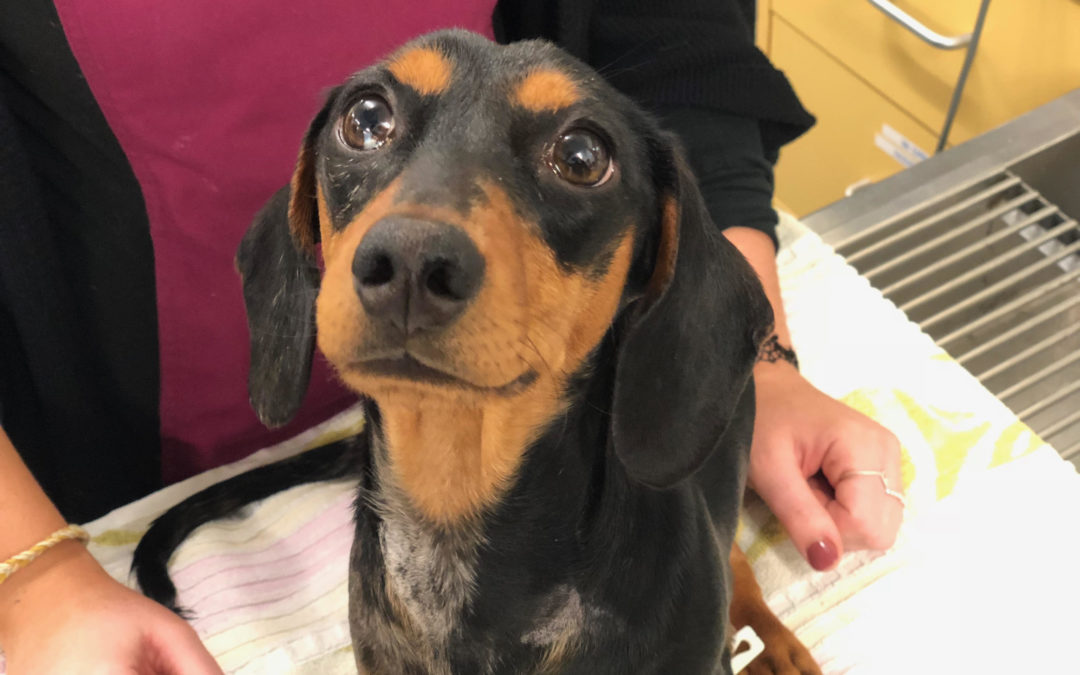
Meet Otto, a gorgeous Daschund puppy who ingested an unknown quantity of Ibuprofen while his owners were out of the house… Otto presented to his Regular Veterinarian but his symptoms progressed rapidly due to the lethal dose of Ibuprofen that he had absorbed and he presented to Canberra Veterinary Emergency Service early one morning when he had started seizuring at home. We were able to control Otto’s seizures but the next 48 hours involved a complicated fluid treatment protocol needed to diurese his kidneys whilst slowly correcting the catastrophic electrolyte imbalance that had occurred as a result of his gastrointestinal and kidney damage. Otto was the perfect patient and never complained about his frequent blood tests and monitoring and with his owner’s constant love and support, responded slowly to treatment and within 48 hours was discharged into his regular veterinarian’s care before finally heading home.
As with many poisonings, if the patient is seen promptly (within an hour or two), emesis or vomiting can be initiated but due to the rapid absorption of most of these products, it may already be too late. Treatment is usually commenced and follows a standard protocol of 48 hours of fluid diuresis and close monitoring of kidney function values whilst protecting the stomach and gastrointestinal tract from ulceration with strong antacids and misoprostol, a prostaglandin that is protective for the stomach.
Some of the most common medications that should not be given to pets and can have serious consequences: Anti-Depressants, Blood Pressure medication, Paracetamol (especially cats!), Benzodiazepines and Sleep Aids, Non-Steroidal Antiinflammatories, Human vitamin supplements (especially Iron supplements) and the Contraceptive Pill.
Never give any human medications to your pet without first checking with your veterinarian and if your pet does accidentally ingest any of these, please call your veterinarian immediately and they will advise if further treatment is necessary.
Canberra Veterinary Emergency Service – Compassionate, Experienced Veterinary Emergency and Critical Care, when you need it the most.